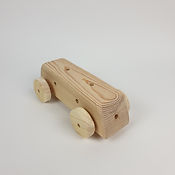
Design for Play
September - December 2021

Brief
To create a design for play, aimed at a specific age range.
This was my first project at university. It was about designing a simple, sustainable and successful toy for a 4-5 year-old.
The design was aimed to help the overall progression and learning of the user while remaining fun and variable.


Research
As this design was aimed at encouraging learning through interactive elements, initial research looked at which age range would benefit most from such a concept. 5-6 years old seemed appropriate as they will have developed a number of critical skills, allowing them to play independently with the design while still benefitting from an element of challenge.
From this point, all decisions were made while keeping this age range in mind.


Design
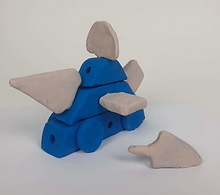
I decided to design a form of puzzle game, and after evaluating and prototyping various concepts, I narrowed it down to a final design which includes the key factors which I found to contribute to a successful toy, based on my research:
It is a set of wooden pieces which can be joined into a number of different forms, only limited to the imagination of the user. Although the set slots and dowels allow for multiple shapes to be created, they have their constraints, encouraging problem-solving in order for the user to create their imagined design.
The concept would come in sets of different sizes, each containing different variations. This final design aimed at including a large number of possibilities for play, keeping the user interested while learning and developing.
Final Design